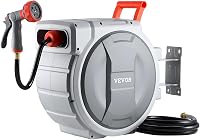
Should You Buy a Hose Reel With or Without Hose?
A hose reel without hose suits you if your current hose works well or you want to choose its length and type. Choose a bundle when you need both pieces and its main hose reaches your watering areas.
On this page (8 sections)
- Should you buy a hose reel without hose or a bundle?
- What does a reel without hose include?
- Which separate reel and hose options suit your yard?
- How do you check whether your hose will fit?
- Should your reel stay in one place or move?
- How do you set up a reel with a separate hose?
- Which mistakes make a separate reel harder to use?
- Which hose reel setup should you choose?
A hose reel without hose is a good buy when your current hose works well or you want to choose its length and type. Buy a bundle when you need both parts and its main hose reaches the places you water.
The choice starts with your yard and the hose you need to move through it. Extra capacity helps only if you'll use it, while a reel in the wrong spot can make a suitable hose awkward to handle.
Should you buy a hose reel without hose or a bundle?
Choose a separate reel to keep a useful hose or control your hose choice. Choose a bundle for a matched setup, provided its length, diameter, and storage style suit your yard.
Keeping an existing hose makes sense if its cover and ends are sound. Replace damaged washers or fittings where practical, but don't build your new setup around a hose with cracks or repeated leaks.
A bundle reduces the number of parts you need to match. With an enclosed retractable reel, check how hose replacement works before buying, since you may have less freedom to swap in another hose.
Compare the complete setup rather than the reel alone. A separate reel may also need a leader hose, mounting hardware suited to your wall, or adapters for your connections.
Use how to choose a hose reel to narrow down the storage style before comparing individual models.
What does a reel without hose include?
A reel without hose supplies storage for your main garden hose, but it may include a short leader hose. Read the included-parts details carefully so you know which connection pieces you'll need.
The leader runs from the faucet to the reel's inlet. The main hose connects to the reel and extends to your beds, lawn, or washing area.
Check both connections on a hose reel without hose
Plan the faucet-to-reel connection and the reel-to-garden connection separately. Matching only the main hose can leave you with a reel that stores it but cannot connect to the water source.
Measure the leader's route around any obstacles rather than measuring a straight line. Leave enough slack to avoid pulling sideways on the faucet or sharply bending the hose near a fitting.
For the purpose of each connection piece, see hose reel parts explained.
Which separate reel and hose options suit your yard?
The VEVOR cart suits movable storage, the Giraffe Tools hose suits a separate hose purchase, and the Ansionsol reel suits a fixed wall location. These are 2 reels and 1 hose, so none is a complete reel-and-main-hose bundle.
VEVOR cart: for moving storage between watering areas
Choose the VEVOR 175 Ft Cart if you want to move your reel between useful parking spots. Its capacity also leaves room for a longer hose than the wall reel below.
It has a powder-coated steel frame, brass fittings, 2 solid PVC wheels, and a non-slip winding handle. The cart weighs 16 pounds before you add a hose, which matters if you'll need to lift it.
Skip this cart if you want clear floor space or would have to carry it up steps often. Wheels help with rolling, but they don't remove the weight of the hose or make stairs easier.
Measure a parking spot with room to turn the crank. A cart that fits tightly between pots may still be awkward to use.
Giraffe Tools hose: for choosing your main hose separately
Choose this Giraffe Tools hose if you need substantial reach and already have, or plan to buy, a compatible reel. Skip it if a shorter hose covers your yard, since unused length adds weight and winding work.
It has female-to-male 3/4 in GHT connections, a replaceable gasket, and swivel handles. Giraffe Tools says the handles help release kinks and the outer layer resists abrasion and UV exposure.
The hose weighs 14.7 pounds, so include that weight when planning a movable setup. Its 5/8 in hose size and 3/4 in connection size describe different parts; don't use the fitting size to judge reel capacity.
Ansionsol wall reel: for a fixed watering station
Choose the Ansionsol Wall Reel if you want hose storage off the ground and have a suitable mounting surface near the faucet. It leaves the main hose choice to you.
This steel winder has a powder-coated finish, a brass connector, and capacity for 125 ft of 5/8 in hose. It's a fit for readers who want a fixed winding point rather than a cart.
Skip it if you cannot mount into a suitable structure or need to move the reel between faucets. Confirm the leader reaches your chosen mounting position before drilling.
Our guide to mounting a hose reel on vinyl siding or brick covers surface-specific planning.
How do you check whether your hose will fit?
Match hose length, diameter, and fittings to the reel, then check the space needed for winding. Capacity figures apply to the stated hose size, not every hose with the same length.
Measure from the reel's planned position to the farthest watering point. Follow the route around beds, fences, and corners, allowing slack so you can move the nozzle without tugging the reel.
Choose the shortest practical hose for that route. Buying much more length than you need means dragging and winding extra hose after each use.
A thicker hose takes up more drum space, and loose coils can fill a reel early. Leave winding room rather than assuming a hose at the capacity limit will be equally easy to store on every reel.
Our hose reel size guide explains capacity matching in more detail.
Check the connection standard as well as the diameter. Inspect washers and sealing surfaces before reaching for adapters, since a worn washer can cause a leak even when the threads fit.
Should your reel stay in one place or move?
Choose a fixed reel when one location reaches your watering areas. Choose a cart when moving the storage point between faucets or work areas will reduce hose dragging.
Picture the full job, including putting the hose away. A wall reel near the faucet may suit daily bed watering, while a cart may suit separate front and back yard tasks.
Check gates, steps, storage doors, and crank clearance before choosing. Position either style so the hose can pull out without scraping a sharp corner.
For another storage comparison, read hose reel cart vs hose reel box.
How do you set up a reel with a separate hose?
Connect and wind an untangled hose with the water off, following the reel's assembly instructions. Mount a wall reel securely before loading it, or place a cart on level ground.
- Inspect the hose ends and make sure the sealing washers are seated.
- Connect the leader to the faucet and reel inlet, keeping it free of sharp bends.
- Lay out the main hose so twists don't feed onto the drum.
- Connect the main hose to the reel, then wind it in even layers without forcing the crank.
- Open the faucet slowly and check the connections for drips.
Use the reel's hose guide if it has one; otherwise, guide the hose across the drum with your hand clear of moving parts. Stop and remove a twist rather than trapping it under the next layer.
For more detail on loading a cart, see how to put a hose on a hose reel cart.
Which mistakes make a separate reel harder to use?
The biggest mistakes are overfilling the drum, pulling against tight bends, and ignoring leaks. Correcting these early helps keep winding manageable and avoids strain on connections.
Don't treat a reel's maximum capacity as a target you must fill. More hose isn't useful if it makes routine watering harder.
Avoid dragging a cart by its hose or stretching a leader tight to reach the faucet. Move the reel closer or use a suitable leader length instead.
After watering, turn off the faucet and release pressure through the nozzle. Wipe away mud or grit before winding, and check exposed fittings for drips during regular use.
A weather-resistant finish doesn't replace cold-weather care. Follow how to winterize a hose reel before freezing conditions, including draining the hose and connections.
Which hose reel setup should you choose?
Buy a hose reel without hose when you can reuse a sound hose or have a clear reason to choose your own. Buy a bundle when you need both parts and its hose reaches your watering areas without excess length.
Choose the VEVOR cart for movable storage, or the Ansionsol wall reel for a fixed station with a suitable mounting spot. Add the Giraffe Tools hose only if you need its reach and have matched it to the reel.
Before ordering, settle 3 things: where the reel will sit, how far the hose must reach, and how both water connections will work. If the storage style is still undecided, compare the options in our guide to hose reels for home.
Frequently asked questions
Is it better to buy a hose reel with or without a hose?
Buy a hose reel without a hose when your current hose fits or you want to choose a specific length and type. A bundle makes sense when you need both pieces, its main hose reaches your watering areas, and you prefer fewer separate buying decisions.
Can you use any garden hose on a hose reel?
No, the hose must suit the reel's capacity, connection type, and winding design. Match both length and diameter, and check any instructions for specialty hoses before pairing them with a reel; a hose that connects to the inlet can still be too bulky to wind neatly.
Does a hose reel without a hose include a leader hose?
Some do, but a leader hose is separate from the main garden hose; it connects the faucet to the reel and usually covers only a short distance. Check the included parts, then measure the actual route between the faucet and reel to see whether that leader will reach.
What should I check before buying a hose reel without a hose?
Check hose length, diameter, fittings, reel capacity, and where the reel will sit. Inspect an existing hose for worn ends or leaks before planning to reuse it; then measure your watering route and the faucet connection, leaving room to turn the crank and pull the hose out.