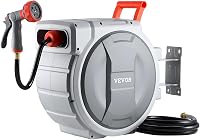
How Do You Winterize a Hose Reel?
To winterize a hose reel, shut off the water, release pressure, disconnect the supply, and drain the hose, reel, and fittings. Store removable equipment where it won't freeze as the reel manual directs, and cover outdoor equipment only after it dries.
On this page (8 sections)
- How do you winterize a hose reel step by step?
- What needs to be drained before freezing weather?
- Should you remove the hose or leave it on the reel?
- Does a hose reel cover help in winter?
- How should you protect a wall-mounted reel?
- How should you protect a hose reel cart?
- What winter storage mistakes should you avoid?
- Which winter storage setup should you choose?
To winterize a hose reel, shut off the water, release pressure, disconnect the supply, and drain the hose, reel, and fittings. Follow the reel manual for winter storage, especially with a retractable unit that may need a specific hose position or removal method.
Do this before the first freeze, while connections still turn freely. A cover helps protect dry equipment from weather, but trapped water can still freeze and expand underneath it.
How do you winterize a hose reel step by step?
Drain the whole water path before storing or covering the reel. Read the manual first so you know which connections to remove and whether the reel must come indoors.
- Shut off the water. Turn off the faucet, and follow any separate winter shutoff steps for your outdoor plumbing.
- Release pressure. Open the nozzle until flow stops, then remove it if the instructions allow.
- Disconnect the supply. Separate the leader hose from the faucet so the faucet can drain as designed.
- Drain each section. Empty the main hose, leader hose, reel connections, and removable accessories using the approved method.
- Let the equipment dry. Wipe dirt and moisture from accessible surfaces before storage.
- Store or cover it. Move removable equipment to a frost-free place when directed, or secure a fitted cover if outdoor storage is allowed.
For a removable hose, open both ends and lay it along a gentle slope. Lift sections gradually toward the outlet to help water leave low loops, then coil without sharp bends.
How do you winterize a retractable hose reel safely?
Use the manual's draining method and control the hose during retraction. Keep hold of the hose and guide it back so the nozzle or end fitting doesn't whip toward the housing.
Don't open the spring housing, pull against a frozen mechanism, or improvise a drain hole. See how a retractable hose reel works for operating basics and our hose reel spring safety guide for recoil precautions.
What needs to be drained before freezing weather?
Check the hose, leader hose, swivel, and removable accessories, because each can hold water separately. An empty nozzle doesn't prove that the rest of the system is empty.
Low loops, quick connectors, and shutoff fittings deserve attention. Open or separate removable accessories as their instructions allow, and let them drain before placing them in storage.
Disconnecting the hose also helps protect the faucet. Even a frost-resistant faucet may need the hose removed to drain properly; follow its own instructions for winter use.
Inspect connections while they're accessible. Our guide to why a hose reel leaks at the swivel explains where to look if you noticed dripping during the watering season.
Don't force frozen connectors or thaw them with an open flame. Avoid compressed air unless the equipment maker permits it and provides a pressure limit and procedure.
Should you remove the hose or leave it on the reel?
Leave it attached only if you can complete the reel's approved draining and storage process. A removable hose on an open reel and an enclosed retractable system need different handling.
With an open manual reel, a removable hose can be easier to drain when laid out. With a retractable reel, don't detach the internal hose or dismantle the housing just to empty it.
Move a cart to dry shelter when practical, securing it so it can't roll. A shed or unheated garage may still freeze, so choose a frost-free space when the instructions require one.
For a removable wall unit, check the release method and support its weight before lifting it off. If it stays mounted, inspect the bracket and fasteners without loosening a loaded reel.
If winter storage affects your next reel choice, how to choose a hose reel covers mounting style and hose size. Our home hose reel guide compares retractable, wall-mounted, and cart setups.
Does a hose reel cover help in winter?
A cover shields a drained, dry reel from rain, dirt, and sun exposure. Buy by the equipment's shape and outside measurements, rather than by hose capacity alone.
Measure the stored setup, including handles, fittings, and any projecting bracket. Leave enough clearance to slide the cover on without stretching seams, and check that its lower edge can fasten around the unit.
KUAINICE: for compact wall hose holders
The KUAINICE Hose Reel Cover suits a simple wall holder rather than a bulky enclosed reel. It measures 18 x 18 in, uses double-sided Oxford spun cloth, and has an elastic fit.
Its intended hose range is 5/8 in by 50–100 ft, but the actual shape of your coiled hose still matters. Choose it for compact hanging storage; skip it for a wheeled cart or a housing that exceeds its coverage.
Aogigigio: for wall or standing setups
The Aogigigio Wall Reel Cover suits buyers who want a bottom drawstring to gather the cover around a wall-mounted or standing reel. It uses double-layered, silver-coated 190T fabric and is intended for 5/8 in hoses from 50–100 ft.
Choose it when the lower edge is accessible and you can tighten it around the equipment. Skip it for a large cart or if you can't confirm the required depth, since its 25 x 25 in dimensions don't guarantee clearance around a bulky housing.
Our guide to hose reel covers helps compare cover shapes. Neither hose length nor fabric thickness can make up for the wrong fit.
How should you protect a wall-mounted reel?
Use a cover shaped for the housing and wall connection, after confirming that the reel can remain outdoors. Check clearance behind the unit as well as around its front and sides.
The Aaaspark 420D Wall Reel Cover suits enclosed wall-mounted retractable reels within its 26 x 11 x 18.9 in cover dimensions. Its wall-facing zipper helps with installation around a mounted unit.
It combines 420D Oxford fabric with a bottom drawstring, straps, buckle fasteners, and a side opening for ventilation and nozzle access. Choose it when you need several fastening points; skip it for a cart or a housing that leaves no installation clearance.
Keep the ventilation opening clear, and check that closures don't pinch the hose or catch on the bracket. If you use the reel during a mild spell, repeat the draining process before the next freeze.
For mounting questions, read whether you can mount a hose reel on vinyl siding or brick. A cover should fit the mounting arrangement without requiring you to move or weaken the bracket.
How should you protect a hose reel cart?
Cover the full cart frame after draining it, and park it on firm ground where water won't pool. Include wheels, handles, and the crank when measuring.
The GRABADO 420D Cart Cover suits wheeled carts that need full-frame coverage. It measures 39 x 28 x 39 in and has front and rear buckles, a side air vent, padded handles, reflective strips, and a hose opening.
Its Oxford fabric has coated inner material and waterproof strips at the seams. Choose it for a cart that fits comfortably beneath it; skip it for a compact wall reel, where the excess fabric would be awkward to secure.
Use the front marker to orient the cover, then secure the buckles without pulling the fabric tight across sharp edges. Leave the vent clear and avoid dragging the hem through wet soil.
Before rewinding a removable hose in spring, see how to put a hose on a hose reel cart. Even winding helps prevent crossed loops and makes the stored setup easier to cover.
What winter storage mistakes should you avoid?
Avoid covering damp equipment, leaving accessories full, or assuming shelter prevents freezing. Good storage starts with drainage and ends with occasional checks.
A tight plastic wrap can trap moisture around metal parts. Let the reel dry, use the cover's ventilation openings, and inspect underneath after wet or windy weather.
Don't leave a cover loosely draped over the unit. Secure its fasteners, remove debris from the top, and check that fabric hasn't shifted against an exposed edge.
Keep drained nozzles, adapters, and small seals together in a labeled container. Our guide to hose reel parts helps identify the swivel, guide, and stopper before you order replacements or reassemble the system.
Clean covers according to their care instructions and dry them before putting them away. At spring startup, inspect the hose, reconnect the supply, and turn the water on slowly while watching for leaks.
Which winter storage setup should you choose?
Winterize the hose reel first, then choose storage and coverage around its design. If the manual requires indoor storage, a heavier outdoor cover doesn't change that requirement.
Choose KUAINICE for a compact wall holder, Aogigigio for a suitable wall or standing setup with an accessible drawstring, and Aaaspark for an enclosed wall reel needing shaped coverage. Choose GRABADO when you need to cover a wheeled cart's full frame.
If your current cover already fits and fastens securely, keep using it after checking its condition. Use our hose reel cover guide when a different shape or size would solve a specific fit problem.
Frequently asked questions
Should you disconnect a garden hose before winter?
Yes, disconnect the garden hose from the faucet before freezing weather, after shutting off the supply and releasing pressure. A connected hose can stop some outdoor faucets from draining properly, so drain the hose and reel separately and follow the faucet's own winter shutoff instructions.
Can a hose reel stay outside in winter?
A hose reel can stay outside only if its maker allows winter outdoor storage and you complete the required draining steps. A fitted cover helps shield the dry unit from weather, but move removable equipment somewhere frost-free when instructed, especially if water cannot drain fully in place.
How do you drain a retractable hose reel?
Follow the reel manual's drain sequence, starting with shutting off the water and releasing pressure through the nozzle. Disconnect the supply as directed, use the required hose position, and guide any retraction by hand; don't open the spring housing or use compressed air unless the maker permits it.
Does a hose reel cover prevent freezing?
No, a hose reel cover does not prevent trapped water from freezing or replace proper draining. Use it to reduce weather exposure after the hose, reel, and fittings are drained and dry, and choose a shape that fits without blocking vents or leaving loose fabric on the ground.