Hose Reel Parts Explained: Swivels, Guides and Stoppers
Choose hose reel parts by reel model, part function and connection type. Swivels carry water through rotating joints, guides control the hose path, stoppers set the return point, and brackets support the reel.
On this page (8 sections)
- What are the main hose reel parts?
- What does a hose reel swivel do?
- How do you match a replacement swivel?
- What do hose guides and stoppers do?
- What is a swivel bracket?
- How do you install replacement fittings without causing leaks?
- How do you care for swivels, guides and mounting parts?
- Which hose reel parts should you buy?
Choose hose reel parts by reel model, function and connection type before comparing materials. A swivel handles a rotating water connection, a guide controls hose travel, a stopper sets the return point, and a bracket supports the reel.
First locate what is leaking, loose, bent or missing. Buying a new swivel won't fix a split inlet hose, and a replacement stopper won't repair a faulty return mechanism.
What are the main hose reel parts?
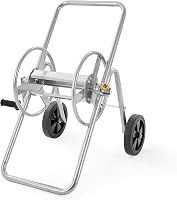
The drum stores the hose, while the frame or housing supports it and the water connections feed it. The parts you can replace depend on the reel's design.
Manual reels usually have a crank and axle. Retractable reels add a return mechanism, often with a guide and stopper, while carts also need wheels and a stable frame.
For an overview of these designs, see hose reels for home. Our guide to buying a hose reel with or without a hose explains the tradeoffs when repair leads to replacing the whole unit.
Identify hose reel parts by the symptom
Trace a leak to its first wet point before ordering anything. Dry the outside, briefly run water through the assembled reel, and watch whether water starts at a threaded connection, the rotating joint or the hose itself.
For poor hose travel, inspect the visible guide, stopper and hose path with the supply off. Keep spring housings closed unless the manual provides an approved service procedure.
What does a hose reel swivel do?
A swivel allows rotation at the water connection, reducing the twisting that a fixed joint would put on the hose. It needs both the right threads and enough clearance to turn without hitting the frame.
The Awesir swivel uses a 90-degree layout, ball bearings and an external grease fitting. Its nickel-plated steel body suits buyers replacing a matching angled swivel who want access for routine lubrication.
Choose it when the old part has the same connection arrangement and elbow clearance. Skip it if your reel needs a straight fitting, different threads or a model-specific assembly that this shape cannot replace.
Awesir rates it for up to 5000 PSI, but that does not raise the working limit of your hose or reel. The lowest-rated component sets the system limit, so match the entire setup to its intended use.
How do you match a replacement swivel?
Match thread standard, nominal size, connection gender and physical layout at both ends. Hose diameter alone cannot tell you which swivel fits.
A 1/2 inch NPT connection is a nominal pipe size, not a promise that its threads measure 1/2 inch across. Standard garden-hose threads also differ from NPT, even when fittings look close in size.
Female threads are inside a fitting; male threads are outside. Write down what each end of the replacement needs to accept, and compare the old part's angle, overall space and mounting arrangement.
Which replacement swivel suits your repair?
Choose RUHUALIFE when 316 stainless steel is a priority and its connection layout matches your reel. It has a ball-bearing mechanism and grease fitting, making it an option for buyers who want a serviceable rotating joint.
Skip it if you need male ends or cannot leave room to reach the grease fitting. For chemical service, confirm seal and fluid compatibility with the supplier rather than choosing by body metal alone.
Choose the HoseKit Super Swivel when its included male-to-male adapter solves your connection arrangement. Its nickel-plated steel body is another option for a compatible replacement.
HoseKit identifies it as a replacement for #5024 and 9SS8FP50xFP50 setups. Skip it if neither the direct connection nor the adapter arrangement matches your reel, since extra adapters add joints and take up space.
All 3 swivels here use female NPT connections and share the same maximum pressure figure. Choose by fit, material needs and adapter layout; for diagnosis, read why a hose reel leaks at the swivel.
What do hose guides and stoppers do?
A guide directs the moving hose, while a stopper leaves a usable length outside the reel after retraction. Match these parts to the hose and reel opening, not just their appearance.
Look for cracks, sharp edges or worn rollers where the hose passes through the guide. Repeated rubbing in one spot can also point to poor alignment or pulling the hose at an awkward angle.
A replacement stopper must grip the hose without crushing it and must be large enough to stop at the guide. Follow the reel's instructions for its position and fasteners.
After adjustment, let the hose return slowly while holding it. Keep fingers away from the opening and check that the nozzle remains within easy reach.
Don't move a stopper simply to hide hose that no longer retracts. See how a retractable hose reel works to understand how the guide, latch and return mechanism work together.
What is a swivel bracket?
A swivel bracket supports the reel and lets it pivot toward the direction of pull. Unlike a water swivel, it is part of the mounting system and does not carry water.
The Giraffe Tools PRO bracket fits AW25 1/2 inch 78 ft and AW30 1/2 inch 100 ft reels. It provides 180-degree rotation and uses a 4-hole installation pattern.
Buy it to replace the mounting bracket on one of those models. Skip it for AW20, AW40 or AW50 reels and for other brands, even if the bracket looks similar.
It supports wall or floor installation and comes with hardware. The fixing method still needs to suit the supporting surface; included hardware does not make every wall suitable.
Leave space for the reel to pivot without striking a fence, pipe or window. For surface-specific advice, see how to mount a hose reel on siding or brick.
How do you install replacement fittings without causing leaks?
Install replacement fittings with the supply off and pressure released, following the reel's service instructions. Photograph the original arrangement before removal so you can copy its direction and hose routing.
- Disconnect the supply after releasing pressure, and support the reel so it cannot shift.
- Remove the old fitting without twisting the hose or using the housing as a lever.
- Inspect the mating threads and sealing surfaces for cracks, damage or trapped debris.
- Use the sealant or seal specified for that connection.
- Support the fixed fitting while tightening the joint, then check that the rotating section moves freely.
Don't use thread tape to compensate for mismatched threads. NPT joints and garden-hose connections seal differently, so adding tape everywhere can leave the real fault unresolved.
Restore water slowly and inspect the assembled connections before winding the hose. If a joint leaks, shut off and release pressure again before adjusting it.
How do you care for swivels, guides and mounting parts?
Keep moving parts clean, supported and serviced as directed to reduce avoidable wear. Check for grit around the guide, hose rubbing, loose mounting fasteners and strain on the inlet connection.
Use only the specified lubricant and service method for a greaseable swivel. Don't assume that every rotating joint needs grease or that more grease will cure a leak.
Drain and store the reel according to its instructions before freezing weather. Our guide to winterizing a hose reel covers the shutdown steps that protect water-carrying parts.
If retraction changes, check the visible hose path before blaming the spring. Follow the checks for a retractable hose reel that will not retract, and review spring recoil and secure mounting safety before considering internal work.
Which hose reel parts should you buy?
Buy the smallest compatible repair that addresses the fault. Use these decision rules once you have identified the failed part:
- Matching angled water connection: consider Awesir if its elbow layout clears the reel frame.
- Stainless swivel body: choose RUHUALIFE when its material and connection arrangement suit the job.
- Adapter needed: consider HoseKit when the included male-to-male adapter provides the required connection.
- AW25 or AW30 mounting repair: choose the Giraffe Tools bracket after confirming the model.
- Poor hose travel: match a guide or stopper to the reel before buying a water fitting.
If the drum, housing and mount also need work, compare the full repair with a replacement reel. Use what size hose reel you need to avoid carrying the same capacity problem into a new setup.
The right hose reel parts should restore proper rotation, hose travel or support without forcing a connection. If you cannot identify the original part, send its photos and reel model to the manufacturer before ordering.
Frequently asked questions
What are the main parts of a hose reel?
The main hose reel parts are the drum, frame or housing, hose, water connections and swivel. Manual reels also have a handle, while retractable models use a return mechanism and often a guide and stopper; brackets, wheels and other support parts depend on the reel type.
Can I replace just the swivel on a hose reel?
You can replace a serviceable swivel if the new part matches the threads, connection layout, working pressure and intended fluid. Shut off the supply and release pressure before removal, then follow the reel's service instructions; a sealed housing or an unidentified connection calls for help from the reel maker.
What does a hose reel stopper do?
A hose reel stopper sets how much hose stays outside a retractable reel after it returns. Choose one that fits the hose's outside diameter and the reel's guide opening, then position and secure it as instructed; it should leave the hose end reachable without crushing the hose.
How do I know which hose reel swivel fits?
Match the thread standard, nominal size and male or female connection at both ends, then check the swivel's shape and clearance. A hose's inside diameter does not identify its fitting threads, and a pressure limit alone does not prove compatibility; use the reel model and original part details.