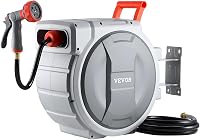
Why Is My Retractable Hose Reel Not Retracting?
A hose reel not retracting may have an engaged lock, a kink, or a snag near its guide. Follow the manual to release the lock, straighten the exposed hose, and walk it back slowly; stop if it binds again or the housing is damaged.
On this page (8 sections)
- Why is my hose reel not retracting?
- How do you release a stuck hose lock?
- Can a kink or hose guide stop retraction?
- When should you stop troubleshooting?
- Which replacement reel suits your watering route?
- How should you set up a replacement reel?
- What habits reduce rewind problems?
- Should you repair or replace a hose reel not retracting?
A hose reel not retracting often has an engaged lock, a kink, or a snag at the guide. Check those points first, then follow the manual's release steps and walk the hose back slowly.
A spring-powered reel needs both a released lock and a clear hose path to rewind. For a quick overview of those parts, see how a retractable hose reel works.
Why is my hose reel not retracting?
Check the lock, exposed hose, and entry guide before assuming the spring has failed. Where the hose stops and whether the lock releases will help you explain the fault to support.
Start by shutting off the faucet and squeezing the nozzle to release water pressure. Clear people, pets, and loose objects from the hose's return path.
Try these checks in order:
- Read the manual's lock-release steps and maximum extension instructions.
- Inspect the exposed hose for twists, crushed areas, and snags around pots or furniture.
- Stand where the hose can enter the guide straight, without rubbing across a corner.
- If the manual calls for a short release pull, try it gently while holding the hose.
- Once it releases, walk toward the reel and control the return.
- Stop if it binds again, makes an unusual sound, or moves its wall bracket.
Don't loosen the hose stopper to release the lock. The stopper controls how much hose remains outside the case, and moving it does not clear an internal jam.
What does a hose reel not retracting partway tell you?
A reel that rewinds partway deserves a hose-path check first. Note whether it stops at the same extended length or only when the hose approaches from a certain direction.
A repeatable stopping point is useful information for support, but it doesn't identify the failed part by itself. Avoid repeated pull-and-release attempts once a gentle check fails.
How do you release a stuck hose lock?
Use the release motion in your model's manual, which may be a gentle, short pull. A longer or harder pull can leave the lock engaged again or put more strain on a jam.
Keep a firm hold on the hose and stay clear of the opening. Once rewind begins, walk it back instead of dropping it and letting the nozzle travel across the yard.
If the hose is already at full extension, don't pull farther to seek a release point. Stop and ask the manufacturer how to proceed for that model.
A released lock should allow controlled movement without forcing the hose. If it remains stuck, treat it as a fault requiring support rather than a stubborn latch.
Can a kink or hose guide stop retraction?
Yes, a twist, snag, or sideways pull can interrupt the hose's path into the reel. Straighten the visible hose and remove obstacles before attempting another return.
Walk along the exposed length instead of judging it only from beside the reel. A loop around a chair leg can hold the hose even when the section near the guide looks clear.
Check the guide opening for visible debris without reaching inside. Don't use a screwdriver to push the hose onto the spool or try to turn internal parts through the opening.
A swivel bracket can help the reel face your working direction, but it still needs room to turn. Nearby walls, pipes, or stored tools can prevent that movement.
For the role of each external part, see hose reel parts explained.
When should you stop troubleshooting?
Stop when gentle checks fail, the housing is cracked, or the mount shifts. Internal spring work belongs with the manufacturer or a qualified repair service.
The spring can remain under tension inside the case. Don't open the housing, add spring tension, or remove covers in search of a jam.
Pause use for damaged hose or leaking fittings, too. A leak near the connection may need a separate fix from the rewind fault, as explained in why a hose reel leaks at the swivel.
Before contacting support, gather the model number, order details, and photos of the guide and bracket. Describe how much hose is extended, whether the lock releases, and what happened just before the fault.
A short video taken from a safe distance may help explain a noise or stopping point. The hose reel safety guide covers spring recoil and secure mounting.
Which replacement reel suits your watering route?
Choose a replacement by usable hose reach, mounting location, and return controls. A new reel won't solve a poor installation or a hose route that catches on the same obstacles.
Measure the route around beds and corners, rather than a straight line across the yard. Keep the leader hose measurement separate because it connects the reel to the faucet.
All 3 options below are wall-mounted reels with a 1/2-inch hose. For a wider choice of storage types, start with the hose reels for home guide.
VEVOR: for a long route with controlled return
The VEVOR suits buyers who need 100 ft of working hose and want slow rewind. Its 6 ft leader connects the reel to the water supply, while the any-length lock lets you stop where you need to water.
The reel includes a 180° swivel bracket, a 9-pattern nozzle, and a 3-layer PVC hose with brass fittings. VEVOR specifies a return time of 10–11.5 seconds per 30 meters, though you should still control the hose throughout rewind.
Choose it for a fixed watering station with a long, clear route. Skip it if you need to move the reel between faucets or can't provide a secure wall mounting point.
Ayleid: for guided winding and seasonal storage
The Ayleid suits buyers who want a self-aligning guide and easy seasonal removal. Its 100 ft rubber hybrid hose works with a dual ratchet lock and slow-return control.
The 180° swivel bracket has a quick-release design, which is useful when taking the reel indoors for winter. Ayleid provides a 24-month limited warranty and directs customers to support through their Amazon order page.
Its nozzle and wall bracket are replaceable, so ask about those parts before replacing a complete unit for an accessory fault. Choose it when guided winding and off-season storage are priorities.
Skip it if you need more reach than its main hose provides. A guide helps hose placement, but you must still clear snags and walk the hose back.
Giraffe Tools: for a shorter watering route
The Giraffe Tools suits buyers whose route fits within 78 ft of retractable hose. Its separate 5 ft leader connects to the faucet and doesn't add to the hose you can pull across the yard.
It combines an aluminum guide, any-length lock, and a 180° swivel bracket. The quick-release mounting design supports removal for storage, and Giraffe Tools recommends a post larger than 4x4 when using a mounting post.
The nozzle, leader hose, and bracket are replaceable. That makes it worth checking part availability if one of those accessories fails later.
Choose it when the shorter working length covers your route. Skip it if reaching the farthest bed would require stretching the hose tight or pulling around a sharp corner.
How should you set up a replacement reel?
Mount the reel on a sound supporting structure with room to swivel. Choose a spot that lets the hose leave the guide toward your main watering area without scraping a corner.
Follow the exact model manual for fasteners, hole sizes, and mounting height. Included hardware still needs to match the wall material and installation instructions.
Check that the leader reaches the faucet without pulling on either connection. Leave access to the shutoff and enough clearance to remove the reel if seasonal storage requires it.
After installation, check the bracket for movement during a short, controlled extension and return. Stop if the mounting point shifts, and correct the installation before pulling out the full hose.
If you're changing reel type or location, how to choose a hose reel helps you match the setup to your yard.
What habits reduce rewind problems?
Clear the return path and guide the hose back each time. Slow-return controls reduce return speed, but they don't steer a nozzle around furniture or free a trapped hose.
Avoid these common mistakes:
- Letting go during rewind: keep control of the hose and nozzle.
- Pulling from behind an obstacle: move into a clear line before returning the hose.
- Forcing full extension: follow the manual's limit instead of tugging for extra reach.
- Spraying lubricant into the case: use only care steps approved for your model.
- Leaving water inside through a freeze: drain and store according to the manual.
Ayleid and Giraffe Tools recommend draining their reels and storing them indoors. Frost-resistant hose or housing materials don't make trapped water safe to freeze.
Should you repair or replace a hose reel not retracting?
Keep the reel if clearing a snag or releasing the lock restores normal return. Contact support when the fault returns, and ask about approved repairs or parts before buying another unit.
For replacement, choose VEVOR for a long route with slow rewind, Ayleid for guided winding and quick seasonal removal, or Giraffe Tools when its shorter hose covers your yard.
A hose reel not retracting needs a safe fault check before a shopping decision. Use how a retractable hose reel works to understand the lock and guide before deciding which part of your setup needs to change.
Frequently asked questions
Why won't my retractable hose reel rewind?
An engaged lock, kink, or snag can stop a retractable hose reel from rewinding. Check the exposed hose and follow the manual's release steps before guiding it back slowly.
If it stops again with a clear hose path, contact support rather than pulling harder or opening the case.
How do you reset a retractable hose reel?
Use only the reset procedure in your reel's manual, because there is no universal method. Some locks release with a short pull, but that is not a repair for an internal jam.
Stop if the hose resists, and don't remove the stopper or open the housing to search for a reset.
Can I repair a retractable hose reel spring?
Leave internal spring repairs to the manufacturer or a qualified repair service. The spring can remain under tension even when the hose will not move.
Ask support whether your model has an approved repair option, and provide its model number, the amount of hose extended, and a description of the fault.
Should I leave water in a retractable hose reel?
Drain the hose before freezing weather and follow your model's storage instructions. Ayleid and Giraffe Tools recommend draining their reels and storing them indoors.
Shut off the supply and release pressure through the nozzle first; frost-resistant materials do not protect trapped water from expanding as it freezes.